
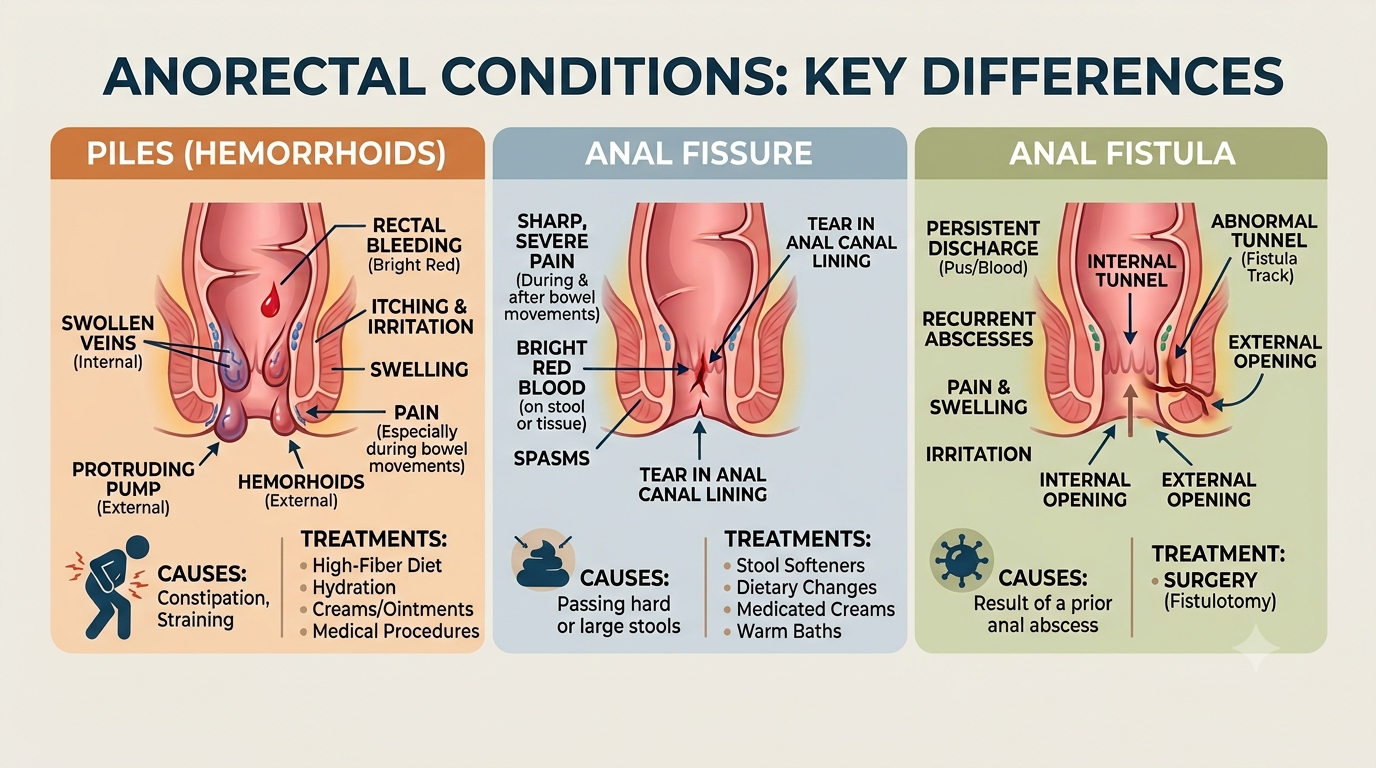
Anal pain, bleeding, itching, or discharge can all feel similar on the surface, which is exactly why so many people assume they have “piles” when the actual problem is something else entirely. Piles, fissures, and fistulas are three separate conditions with different causes, different symptoms, and different treatments. Getting the diagnosis right matters, because treating a fissure like piles (or vice versa) can mean weeks of unnecessary discomfort without real relief.
Here’s how to tell them apart, and why a proper examination beats guessing every time.
What Each Condition Actually Is
Piles (hemorrhoids): Swollen blood vessels in the lower rectum or around the anus. They can be internal or external and develop due to increased pressure in the rectal veins, often from constipation, straining, prolonged sitting, obesity, or pregnancy.
Fissure: A small tear or cut in the lining of the anus, usually caused by passing hard or large stools. Think of it as a cut in the skin rather than swollen blood vessels.
Fistula: An abnormal tunnel that forms between the anal canal and the skin around the anus. It typically develops after an anal abscess or infection that hasn’t fully healed.
In short: piles are swollen vessels, a fissure is a tear, and a fistula is a tunnel. Different structures, different problems.
Symptom-by-Symptom Comparison
Pain
- Piles: Often relatively painless in early stages, especially Grade 1 and 2. Pain becomes more noticeable in advanced stages or if a clot develops.
- Fissure: Sharp, intense pain during and after bowel movements, sometimes lasting minutes to hours afterward. This is usually the most painful of the three conditions.
- Fistula: A dull, continuous ache that isn’t limited to bowel movements. It can persist throughout the day, especially if there’s an active infection.
Bleeding
- Piles: Bright red blood, typically on toilet paper or in the bowl, usually painless.
- Fissure: Bright red blood as well, but accompanied by sharp pain, which is a key way to tell it apart from piles.
- Fistula: Less about bleeding and more about discharge (see below).
Discharge
- Piles: Occasionally mucus, particularly in later grades.
- Fissure: Usually no pus discharge unless the fissure becomes infected.
- Fistula: Persistent pus-like discharge is a hallmark symptom, often with an unpleasant odor, and is one of the clearest signs pointing toward a fistula rather than piles or a fissure.
Swelling or lump
- Piles: A visible or palpable swelling near the anus, especially with external piles or prolapsed internal piles.
- Fissure: No lump. Just a visible tear on examination.
- Fistula: An opening or small lump near the anus that may leak fluid, sometimes with visible skin irritation from ongoing discharge.
Quick Reference
| Piles | Fissure | Fistula | |
|---|---|---|---|
| What it is | Swollen blood vessels | A tear in the anal lining | A tunnel from anus to skin |
| Pain level | Mild to moderate (worse in later grades) | Sharp, severe | Dull, constant ache |
| Bleeding | Common, painless | Common, painful | Uncommon |
| Discharge | Occasional mucus | Rare (unless infected) | Persistent pus |
| Common cause | Straining, pregnancy, prolonged sitting | Hard stools, constipation | Prior abscess or infection |
Why Self-Diagnosis Often Goes Wrong
The overlap in symptoms, bleeding, discomfort, and general anal irritation, is exactly why patients frequently assume they have piles when the actual issue is a fissure or fistula. This matters because:
- Treating a fissure with piles-focused remedies won’t address the underlying tear, and the pain typically persists.
- A fistula that’s mistaken for piles and left untreated can lead to recurring abscesses and infection, since fistulas rarely resolve without proper treatment.
- Some patients even have more than one condition at the same time, which only a physical examination can properly identify.
Persistent bleeding, pain, or discharge from the anal area should always be evaluated rather than self-treated, both to get the right treatment and to rule out other conditions that can present with similar symptoms.
How Diagnosis Works
A proper diagnosis usually involves a physical examination and, depending on the case, a proctoscopy to view the anal canal directly. Fistulas in particular can require imaging, such as an MRI, to map the full path of the tunnel before planning treatment, since fistula tracts aren’t always visible from the outside.
Getting the Right Treatment for the Right Condition
Each condition has a different treatment path:
- Piles are managed based on grade, ranging from diet and lifestyle changes to laser treatment or surgery for advanced cases.
- Fissures often respond to increased fibre, stool softeners, and topical medication, though chronic fissures may need a minor procedure.
- Fistulas almost always require a procedure, since the tunnel structure doesn’t resolve with medication alone.
Dr. Avinash Vagha brings over 40 years of medical experience and more than two decades as a specialist in General and Laparoscopic Surgery, with fellowships including FALS, FMAS, and FIAGES, and treats all three conditions at his Pune clinic. An accurate diagnosis is the first step to picking the right treatment and avoiding weeks of managing symptoms that won’t improve on their own.
If you’re dealing with anal pain, bleeding, or discharge and aren’t sure what’s causing it, the right next step is an examination, not guesswork.
Book a consultation with Dr. Avinash Vagha: dravinashvagha.com/contact/
Frequently Asked Questions
Can I have piles and a fissure at the same time?
Yes, it’s fairly common, especially since both are linked to straining and constipation. A physical examination is the only way to confirm both are present.
Why does a fissure hurt more than piles?
Fissures involve a tear in the anal lining, which is rich in nerve endings, whereas most piles develop above the pain-sensing area of the anal canal, especially in earlier grades.
Is discharge always a sign of a fistula?
Persistent pus-like discharge is a strong indicator of a fistula, though mild mucus discharge can also occur with advanced piles. An examination can tell the two apart.
Do all three conditions need surgery?
No. Piles and fissures are often managed without surgery in early stages. Fistulas, however, almost always require a procedure since the tunnel structure won’t close on its own.
Can a fistula go away without treatment?
Rarely. Fistulas that aren’t treated tend to cause recurring abscesses and infections rather than resolving on their own.